
Ways to Support Families Before the Year Ends
When the government shutdown finally ended, many Americans breathed a sigh of relief, but for countless families, nothing really changed.
SNAP support had already come to a halt, and the shutdown only made the confusion deeper. Some states released partial funds, others offered temporary help, and many families are left unsure whether next month will bring any assistance at all.
As winter settles in, that uncertainty looks like empty cupboards, rising grocery prices, and parents stretching whatever they have left. It’s happening quietly, in homes across the country, in small towns, big cities, and the communities ICNA Relief serves every day.
And with the year ending, more people are asking a simple question: What are the ways to help families in need right now?
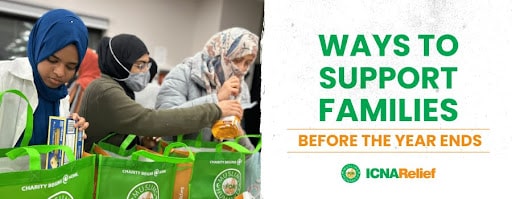
A Crisis Families Didn’t Choose
Food insecurity isn’t an abstract concept. It shows up in the people volunteers serve daily:
- A parent walking into a pantry, saying they’ve never needed help before.
- A senior arriving early because buses run less frequently on the day the pantry is open.
- A refugee family is trying to understand what the SNAP cuts mean for them.
These are not dramatic stories; they’re ordinary families who suddenly lost something essential and didn’t have time to prepare.
SNAP didn’t taper down. It ended.
The shutdown didn’t pause the need. It intensified it.
And while states try to sort out what they can restore, families don’t have the luxury of waiting. They need groceries now. They need stability now. That’s why they need their communities to show up.
Why Year-End Giving Is a Turning Point This Year
For families who lost SNAP benefits, groceries became their biggest expense overnight. Add winter heating bills, rising food prices, and the lingering effects of the shutdown, and you get a situation where small setbacks can push a household into crisis.
This is why year-end donations matter so much. They determine how well ICNA Relief can:
- keep pantry shelves stocked,
- prepare for elevated demand,
- maintain mobile distributions,
- and support families who are still unsure whether their state will restore any aid.
Supporting this work makes a direct, tangible difference. Your donation is tax-deductible (before Dec. 31) and Zakat and Sadaqah eligible, allowing faith and generosity to meet families exactly where support is collapsing.
Where ICNA Relief Fits Into the Picture
ICNA Relief’s role in this moment of need is practical and deeply local. Across 42 states, food pantries, mobile distributions, and emergency food programs are working longer hours and helping more people than they expected going into winter.
It’s not dramatic work. It’s steady, consistent, neighbor-to-neighbor care, the kind of support communities have to rely on when bigger systems fail them.
And as the year draws to a close, this work depends directly on year-end giving.
Simple Ways to Help Before the Year Ends
If you’re wondering, how can I help families in need, you don’t have to guess. Communities are already telling us what they need most.
Donate today
It keeps food flowing to families navigating the SNAP fallout.
Support your local pantry through ICNA Relief
Pantries are the backbone of this response and are seeing record demand.
Give Zakat or Sadaqah
Supporting our neighbors in hardship is part of our faith.
Share what’s happening
Awareness builds compassion, and compassion fuels the work.
A Community Effort to End the Year With Care
Families across America are ending the year in uncertainty, but they’re not ending it alone.
Communities are stepping up. Volunteers are stepping forward. And donors are making sure pantries stay open.
With ICNA Relief, your year-end giving can help a family get through this difficult winter with dignity.
Donate Now – Zakat & Sadaqah Eligible
Join our mission. Volunteer, Donate, Advocate. Get Started Today.

Email: office@icnarelief.org

Call Anytime: 866-354-0102